


Knowing what to write in a follow-up email matters.
Knowing when to send it matters just as much.
Follow up too quickly and you risk sounding pushy. Wait too long and the conversation can lose momentum. That is why having a clear email follow-up cadence can make such a difference.
A good cadence helps you stay visible without overwhelming the recipient.
What Is an Email Follow-Up Cadence?
An email follow-up cadence is the schedule you use for sending follow-up messages after your first email.
Instead of following up whenever you remember, you decide in advance when the next message should go out.
For example:
- First follow-up: 2–3 days after the original email
- Second follow-up: 4–5 days later
- Third follow-up: about a week later
- Final follow-up: 7–10 days after that
The exact timing depends on the situation, but the goal is always the same: stay consistent without sending too much.
How Often Should You Follow Up?
There is no perfect schedule for every email.
Sales outreach, client proposals, networking, recruiting, and partnerships may all need slightly different timing.
In most cases, the first follow-up can be sent within a few days. After that, give the recipient more space between messages.
As your sequence continues, the gaps should usually get longer.
This keeps your follow-ups from feeling repetitive or rushed.
Why Spacing Matters
Sending follow-ups too close together can create pressure.
Waiting too long can make the recipient forget the conversation completely.
Good spacing gives people time to respond while still keeping your message visible.
It also gives you a chance to change the angle of each follow-up instead of sending the same reminder again and again.
What Should Change With Each Follow-Up?
Your timing should not be the only thing that changes.
Each follow-up should have a slightly different purpose.
The first can be a simple reminder.
The second can add useful context or value.
The third can make the next step even easier.
The final message can ask whether it makes sense to close the loop.
This makes the sequence feel more natural and gives the recipient a fresh reason to respond.
Automate Your Follow-Up Cadence With Rebump
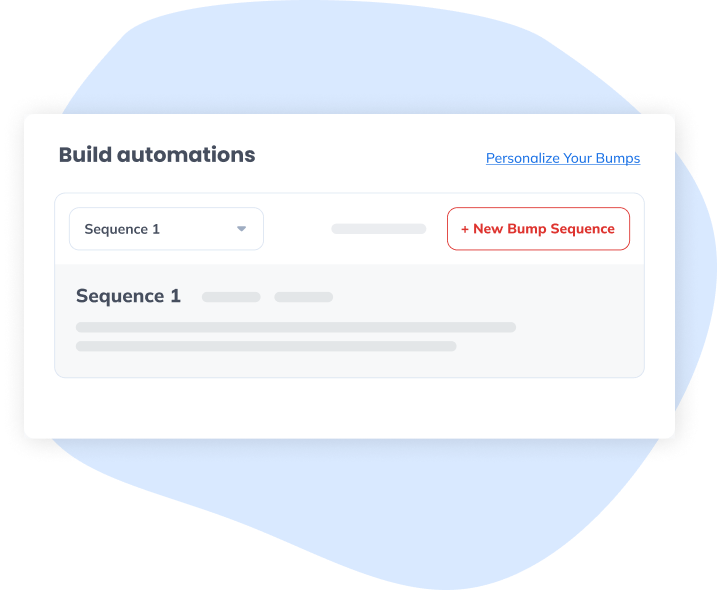
The hardest part of a follow-up cadence is staying consistent.
Remembering when every message should go out becomes difficult when you are managing multiple conversations.
Rebump helps automate that process directly from Gmail. You can create your follow-up sequence, choose the timing between messages, and let Rebump send the next follow-up automatically if there is no reply.
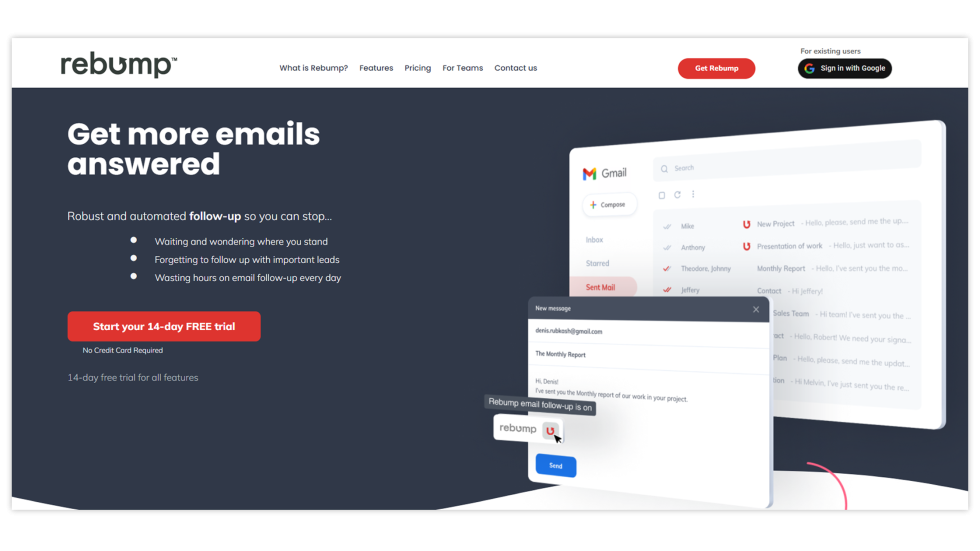
That means you can stay consistent without manually tracking every unanswered email.
Final Thoughts
A strong email follow-up cadence is about balance.
Follow up soon enough to stay visible, but give the recipient enough space to respond. As the sequence continues, increase the time between messages and make sure each follow-up adds something new.
With the right cadence, you can keep conversations moving without sounding pushy.
Ready to make your follow-ups more consistent? Try Rebump and automate your follow-up schedule directly from Gmail: www.rebump.cc